Understanding AI Data Centers
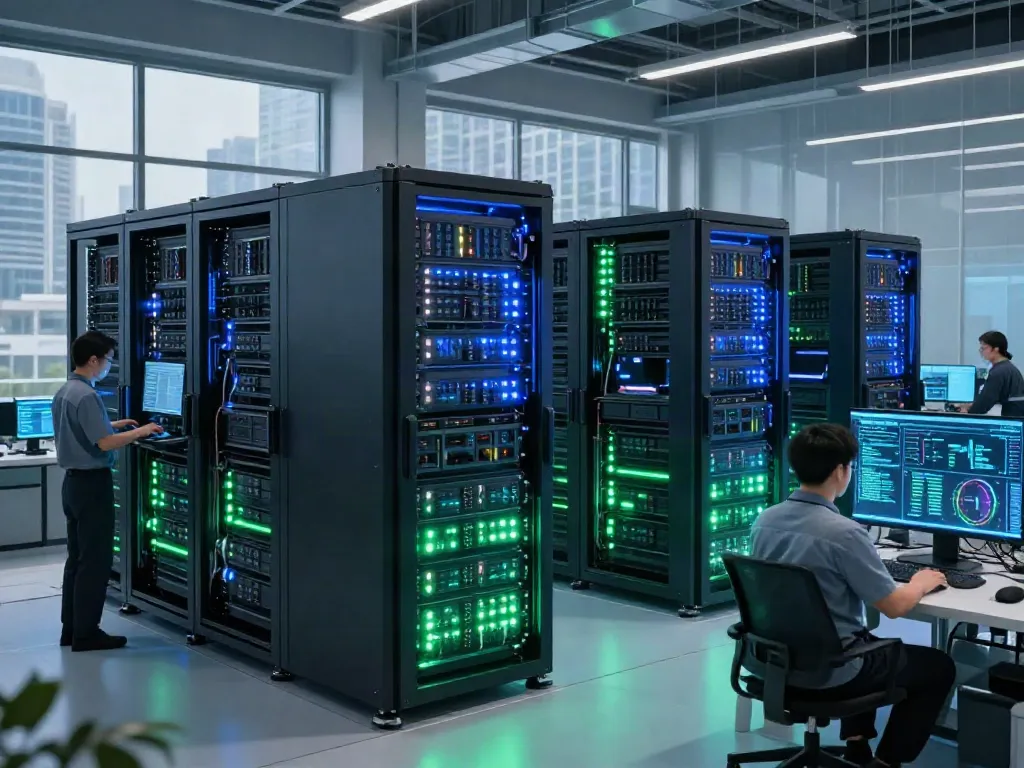
As artificial intelligence continues to evolve and dominate various industries, the concept of an AI data center has emerged as a cornerstone of this technological revolution. These specialized facilities house the necessary IT infrastructure required to train, deploy, and deliver AI applications and services, effectively enabling organizations to harness the full potential of AI technology. When exploring options, AI data center provide comprehensive insights into the infrastructure that supports AI factory operations.
What is an AI Data Center?
An AI data center is distinct from traditional data centers as it is designed specifically to handle the high computational demands inherent to AI applications. These facilities utilize high-density GPU (Graphics Processing Unit) computing, which is essential for the complex calculations required in deep learning and machine learning processes. Unlike conventional data centers that may rely heavily on CPU (Central Processing Unit) computing, AI data centers focus on optimizing performance for AI workloads, thus ensuring efficient processing and rapid data throughput.
The Role of GPUs in AI Operations
GPUs have become the backbone of AI operations, playing a critical role in speeding up the training of AI models. Unlike CPUs, which are optimized for sequential processing, GPUs are designed for parallel processing, allowing them to handle thousands of operations at once. This architectural advantage makes GPUs particularly effective for the matrix and tensor calculations prevalent in AI algorithms. As a result, organizations can deploy AI models faster and with greater accuracy, significantly enhancing their operational capabilities.
Key Components of AI Infrastructure
The successful deployment of AI infrastructure hinges on several key components:
- Compute Power: High-performance computing resources, primarily through GPU clusters, are essential for managing demanding AI workloads.
- Storage Solutions: Given the vast amounts of data involved in AI training, AI data centers often incorporate advanced storage systems that can handle both structured and unstructured data efficiently.
- Networking: High-speed networking capabilities are crucial to facilitate fast data transfers between computing resources and storage, minimizing latency.
- Power Management: Efficient power management systems are necessary to ensure that AI data centers operate at peak performance while minimizing energy consumption.
Why Power is Crucial for AI Data Centers
Power serves as the lifeblood of AI data centers. The sheer energy demands of running advanced GPU technologies and the cooling systems necessary to maintain optimal operating temperatures create an intricate relationship between AI operations and electricity supply. Understanding how power impacts performance and operational efficiency is crucial for stakeholders within the AI ecosystem.
Energy Consumption and Resource Allocation
AI data centers are notorious for their substantial energy consumption. Effective resource allocation strategies are vital in managing this energy usage. Implementing intelligent power distribution systems can ensure that energy is allocated efficiently based on real-time demand, thus optimizing operational costs and reducing overall energy waste.
Impact of Power Quality on Performance
The quality of power supplied to AI data centers can directly impact performance. Fluctuations in voltage or interruptions in electricity supply can lead to system downtime or, worse, hardware failure. To mitigate these risks, AI data centers often employ robust uninterruptible power supply (UPS) systems and backup generators, ensuring consistent and reliable power delivery.
Strategies for Sustainable Energy Use
As environmental considerations take center stage, adopting sustainable energy strategies is becoming increasingly important for AI data centers. Implementing renewable energy sources, such as solar or wind power, can help reduce the carbon footprint associated with energy consumption. Additionally, energy-efficient cooling solutions, such as liquid cooling, are gaining traction as a way to minimize energy use while maintaining optimal performance.
Choosing the Right AI Data Center
Selecting the appropriate AI data center is crucial for organizations aiming to leverage AI technology effectively. This decision can profoundly influence the efficiency, scalability, and cost-effectiveness of AI initiatives.
Comparative Analysis of Leading Data Center Providers
When evaluating data center providers, organizations should consider several factors, including:
- Infrastructure Capabilities: Assess the provider’s available GPU resources and their ability to scale operations based on demand.
- Network Connectivity: Examine the quality of networking capabilities to ensure quick data transfer and minimal latency.
- Energy Efficiency: Review the sustainability practices and energy efficiency measures employed by the provider.
Cost Considerations and ROI for AI Services
The costs associated with AI data centers can vary widely based on the services provided and the infrastructure in place. Organizations must conduct a thorough cost-benefit analysis to determine the potential return on investment (ROI) of deploying AI services. This analysis should include both direct costs, such as infrastructure and maintenance, and indirect costs, such as energy consumption and resource allocation.
Scalability and Flexibility in AI Infrastructure
Scalability and flexibility are critical in today’s rapidly evolving technological landscape. Organizations should look for AI data centers that allow for quick adjustments in capacity to accommodate the fluctuating nature of AI workloads. Whether through hybrid cloud solutions or modular infrastructure designs, the ability to scale efficiently can significantly enhance operational effectiveness.
Technological Advancements Shaping AI Data Centers
The future of AI data centers is being shaped by several technological advancements that promise to revolutionize how AI services are delivered and optimized.
Emerging Technologies in AI Computing
As the demand for more sophisticated AI applications grows, emerging technologies such as quantum computing and neuromorphic chips are gaining attention. These technologies promise to deliver unprecedented processing power and efficiency, enabling organizations to tackle increasingly complex AI challenges.
Trends in Data Management and Security
Data management and security remain paramount concerns for AI data centers. As organizations collect vast amounts of data, implementing robust security protocols and data governance frameworks is essential to protect sensitive information. Trends such as AI-driven security solutions and decentralized data storage are becoming popular methods to enhance data security.
Future-Proofing AI Infrastructure Investments
Organizations must consider future-proofing their AI infrastructure investments. This can involve adopting modular designs to accommodate future technological advancements and ensuring that the chosen AI data center can support evolving AI workloads and services.
Demystifying Participation in the AI Token Economy
As AI becomes increasingly integral to the digital economy, understanding the AI token economy is essential for organizations and individuals looking to capitalize on these advancements.
How AI Data Centers Contribute to Tokenization
AI data centers play a crucial role in the token economy by supporting the AI workloads that generate tokenized outputs. The infrastructure that delivers these services directly influences the efficiency and effectiveness of the token generation process, thereby impacting the overall value derived from AI operations.
Understanding Contribution Rewards in AI Services
Participation in the AI token economy frequently involves contribution rewards tied to the accuracy and efficiency of the AI services delivered. Understanding how these rewards are calculated and distributed can guide organizations in optimizing their AI strategies and enhancing their engagement with tokenization mechanisms.
Best Practices for Engaging with AI Token Economics
To successfully engage with AI token economics, organizations should consider the following best practices:
- Educate Stakeholders: Ensure all stakeholders understand how the AI token economy operates and the value associated with participation.
- Leverage Data Insights: Utilize data analytics to optimize participation strategies and improve reward outcomes.
- Stay Adaptable: The AI token economy is constantly evolving, so organizations must remain agile and ready to adapt their strategies as needed.
What Are the Risks of AI Data Centers?
While AI data centers offer numerous benefits, they are not without risks. Potential challenges include:
- High operational costs associated with energy consumption and infrastructure maintenance.
- Data security vulnerabilities that can jeopardize sensitive information.
- Technology obsolescence, necessitating continual investments in upgrades and modernization.
What Makes a Data Center AI-Ready?
To be classified as AI-ready, a data center must possess several key attributes:
- High-performance computing capabilities, predominantly through GPU technology.
- Robust networking infrastructure for rapid data processing and minimal latency.
- Scalable architecture that can adapt quickly to changing AI workload requirements.
How to Measure AI Data Center Performance?
Performance measurement is vital in maintaining operational efficiency within AI data centers. Key metrics include:
- Utilization rates of computing resources.
- Speed and efficiency of data processing tasks.
- Energy consumption relative to performance output.
What Are the Key Benefits of AI Data Centers?
The advantages of implementing AI data centers are manifold:
- Enhanced Performance: AI data centers facilitate advanced computational capabilities, significantly boosting performance.
- Improved Scalability: Organizations can scale their AI operations more effectively in a dedicated AI environment.
- Cost Efficiency: Though initial investments may be high, the long-term operational efficiencies can lead to substantial cost savings.